Inside the Creation Process:
How I Build a The Lazz Song
I get questions from time to time about how I actually create the music for The Lazz, particularly because I describe the project as Hybrid-Human and openly acknowledge the use of generative AI as part of my production process.
The short answer is that my process is probably a lot longer than people expect.

It Starts With Almost Nothing
Most of my songs start very simply: a basic drum-machine beat and a guitar.
And when I say basic, I mean basic. The first drum pattern isn't intended to be the final drum performance or even the final groove. It's really just something more musical than a click track, enough rhythm for me to start playing guitar over it and see where something develops.
I don't normally begin the music with the lyrics dictating what the song should sound like. The lyrics usually exist first, at least conceptually, but the music starts independently. I'll put on a beat, pick up the guitar and start playing. Eventually something catches my ear.
From there I begin establishing the basic architecture of the song: intro, verses, choruses, bridges, breakdowns, tempo or feel changes, transitions, and where I want things to pull back or explode.
At this stage, none of the guitar parts need to be particularly elaborate or polished. I'm building the skeleton of the song.
As the music develops, the lyrics and arrangement can begin influencing one another. Neither is necessarily locked. A lyric can change because of what the music became, and the music can change because I've discovered a better way for the lyrics to fit.
The song evolves as a whole.
Building the Groove
Once I have the basic structure of the song, I start replacing that simple drum-machine beat with something much more deliberate.
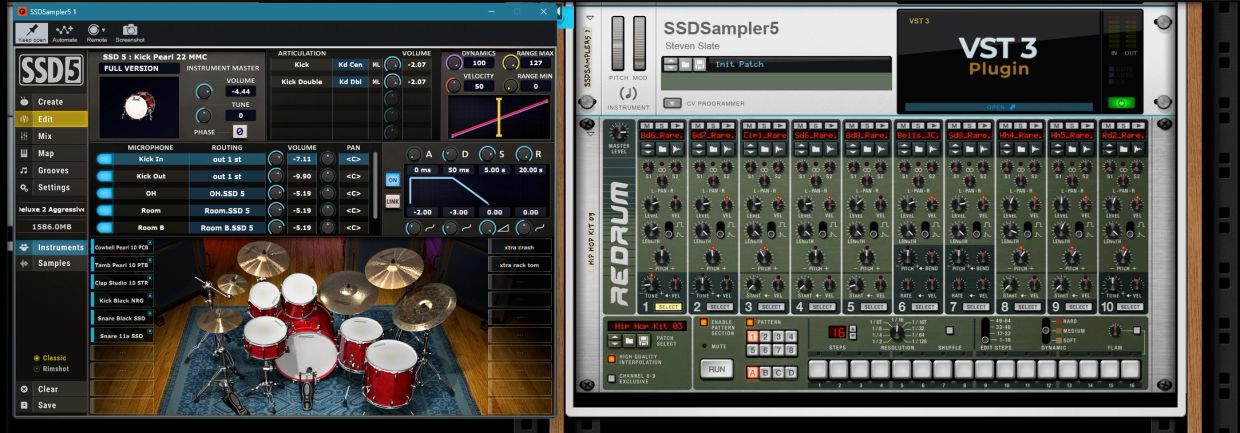
I build the drum parts in Reason, my primary digital audio workstation (DAW), using the Redrum Drum Computer. This is MIDI programming, but I approach it as part of the composition rather than simply dropping in a finished beat. I program the kick, snare, cymbals, toms and other elements individually, getting as detailed as I can while deciding where the song needs halftime sections, double-kick patterns, faster passages, fills, transitions and changes in intensity.
I'm not a drummer, so I'm not pretending to approach this the way someone sitting behind a physical kit necessarily would. What I'm really doing is composing the rhythmic framework I want the guitars to interact with.
For the initial sound of those programmed drums, I route the MIDI through Steven Slate Drums for a more realistic feel. At this point, though, the specific drum sound isn't nearly as important to me as the groove itself.
And this is where the guitar writing really begins.
Once I have an actual groove underneath me instead of the simple beat I started with, I'll pick up the guitar again and start playing against it. The drums begin suggesting accents, spaces and rhythmic possibilities that weren't necessarily apparent when I first laid out the song.
The original beat gives me something to write over. The programmed groove gives me something to riff against.
Enter... Guitars
Finding the Riff
Once the groove is established, I go back to the guitar and start the part of the process that probably involves the most experimentation: finding the actual riffs.
I'll take a section of the song, maybe eight bars, and loop it. Then I start recording ideas. I'll record one riff, create another track and try something different. Then another. And another. I may end up with quite a few completely different ideas stacked up for the same section of the song.
None of these are intended to be final performances. At this stage I'm looking for ideas, not perfection.
Sometimes one riff is clearly the answer. Other times I'll like the beginning of one idea and the ending of another, or hear something in two different takes that suggests an entirely new riff. I'll combine those ideas, change them, replay them and keep working until the part feels right.
That process also applies to melodies, harmonies and solos. If a song has a solo, it will often grow out of musical ideas that already exist elsewhere in the song. I like having those connections because they make the different parts feel like they belong to the same piece of music rather than being separate ideas pasted together.
Once I've decided what the part actually is, the experimental recordings get discarded and I perform it again specifically for the final track. I'll record it as many times as necessary to get the timing, articulation and performance where I want them.
I don't necessarily record an entire song from beginning to end in one performance. The music can get fairly technical, and there may be several different guitar parts happening throughout a song. I work section by section and phrase by phrase when necessary. What matters to me is that every part that eventually goes into the production is a guitar performance I actually played.
Double Tracking the Guitars
I double-track all of my rhythm guitars, a technique that became part of the way I work after my experience recording professionally with the band Dying Regret and Avenged Sevenfold producer/engineer, Fred Archambault.
Rather than duplicating a single performance, I actually perform the part twice. The small natural differences between two performances help create the width and weight I'm looking for while still keeping the playing tight.
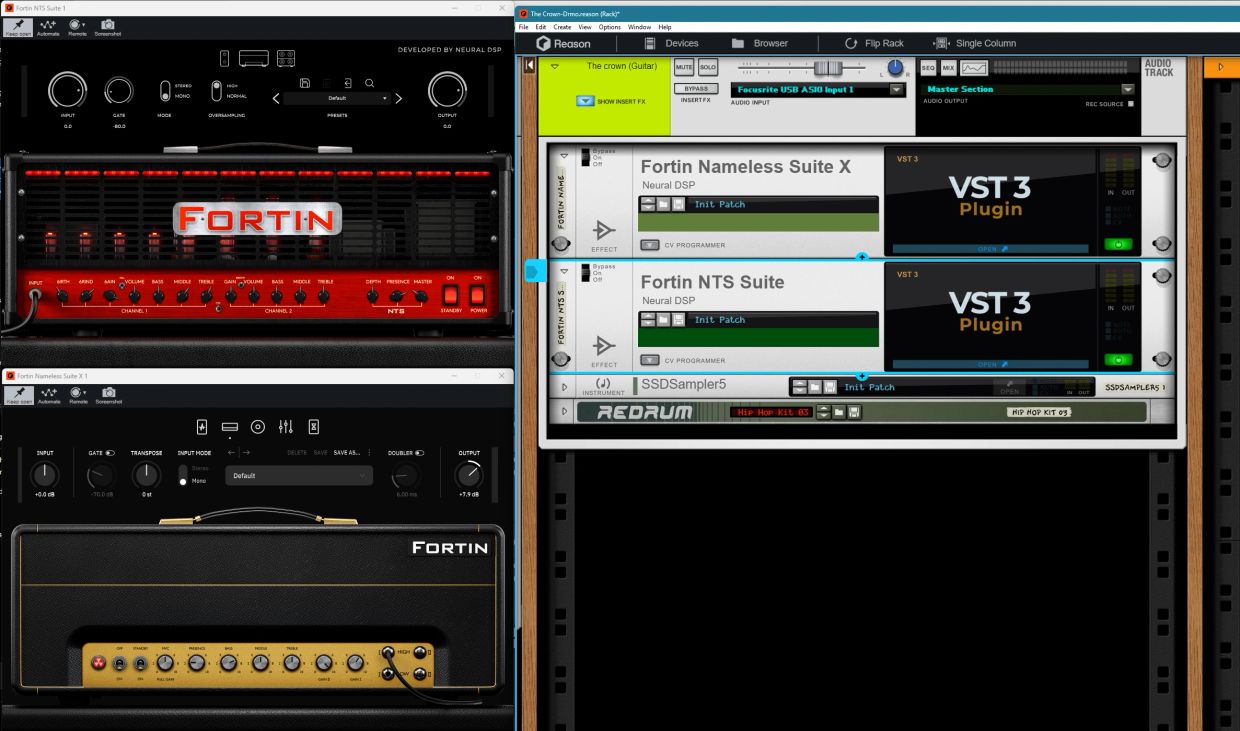
Today, I record directly into Reason through my Focusrite interface and use Neural DSP amp-modeling plugins, specifically the Fortin Nameless and Fortin NTS. I'll generally use the two different amp sounds across the doubled performances, which gives me some flexibility to mix the two performed guitar parts together to get the exact tone I happen to be looking for, as well as to mimic two different guitar performers.
At this stage I deliberately keep things pretty dry. I'm not building elaborate chains of reverb, delay, EQ or other processing around the guitars. I'm primarily concerned with the performance, the riff and the tone coming from the amp models. The broader production treatment comes later.
By the time I'm finished with this stage, the guitar writing isn't an instruction for something else to create. It's the actual musical performance that the rest of the production will be built around.
The Bass Guitar
I don’t approach the bass as something that simply follows the guitar automatically.
Sometimes locking directly to the guitar riff is exactly what a section needs. Other times I want the bass to move independently and contribute its own musical voice underneath the guitars. I tend to approach it more like orchestration: every instrument should have a reason for what it's doing rather than simply duplicating something else.
I compose the bass parts myself and perform them on guitar through a bass-emulation and conversion setup that translates what I play into MIDI. The conversion is usually very accurate, but once it’s in MIDI I can still adjust timing, note duration or other details when necessary.
So while the finished bass sound is realized virtually, the bass line itself begins as something I composed and physically played for that specific role in the arrangement.

Enter... Vocals
Writing the Vocal Melody — On Guitar
This is one of the more unusual parts of my process that actually took me quite some time to develop and perfect.
Once the instrumental composition is close to where I want it, I have to decide exactly what I want the vocalist to sing.
So I play it.
I create a separate single-note guitar line specifically as the vocal melody. No chords, just the melody. That line establishes the pitches, range, movement, rhythm and general phrasing I want the vocal performance to follow.
I then make a temporary export specifically for developing the vocals. It contains the single-note guitar melody I've written as the vocal guide. I upload that version into the generative system so the vocal performance has an existing melody to follow rather than being asked to invent one from scratch.
Once I get a vocal interpretation that follows the melody the way I intended, I export that vocal performance and bring it back into Reason. The temporary guitar melody has now done its job, so I mute or remove it and replace it with the vocal.
The guitar line was never intended to be heard in the finished song. Its job was to communicate the vocal melody I had written.
Developing the Vocal Performance
Once the melody is established, I start working on the actual vocal performance.
This is another part of the process where experimentation plays a big role. I already know the lyrics, the melody and the general phrasing I'm looking for, but there can still be a lot of different ways to perform the same vocal
Just like when I'm experimenting with guitar riffs, I don't automatically accept the first result. I listen, compare, adjust and keep working until I hear the performance that belongs in the song.
For The Lazz, I may also be working with both male and female vocals, depending on the song. That becomes another arrangement decision, determining which voice should carry a particular section, where they should interact, and where harmonies or layered vocals make sense.
The generative system performs the voice, but the melody, lyrics, arrangement and final selection of the performance are decisions I've already made or continue making throughout the process.
Bringing the Vocals Back Into the Production
Once I have the vocal performances I want, I bring the individual vocal tracks back into Reason and begin fitting them into the actual production.
At this point, I'm no longer working with a generated song. I'm working with individual audio tracks inside the same project where I've been building everything else.
The first step is usually editing. I'll line up sections where necessary, make cuts, adjust timing, clean up transitions and decide exactly which performances or portions of performances I want to use. A verse might come from one take while a chorus or even a particular phrase works better from another.
I also separate and arrange harmonies, backing vocals and additional vocal layers where the song calls for them. Just because something was generated together doesn't mean it has to remain together. The arrangement continues to be built inside Reason.
Cleaning Up the Vocals
Generative audio isn't always clean. There can be artifacts, harsh frequencies, unusual transients or other imperfections that become much more noticeable once a vocal is placed alongside the rest of the production.
So the vocals generally go through a restorative stage before I consider them finished.
I won't turn this into a list of every processor or setting I use because those change depending on the song. The important part is that I treat the generated audio much like I would any other recorded source that needs work: identify the problems, correct what needs correcting and preserve what sounds good.
Sometimes that process reveals that the performance itself isn't good enough. If I'm fighting a vocal too hard to make it work, I'll go back and generate another performance rather than trying to repair something that wasn't right to begin with.
The goal isn't to make the vocal sound processed. The goal is for the processing to disappear and leave behind a vocal that feels like it belongs in the record.
Enter... Generative Production
The Song Goes In Already Written
At this point, the song already exists.
The structure is established. The riffs, melodies and guitar parts have been written and performed. The drums and bass establish the rhythmic foundation, the lyrics are in place, and the vocal melodies have been worked out.
Those are the things I want to preserve.
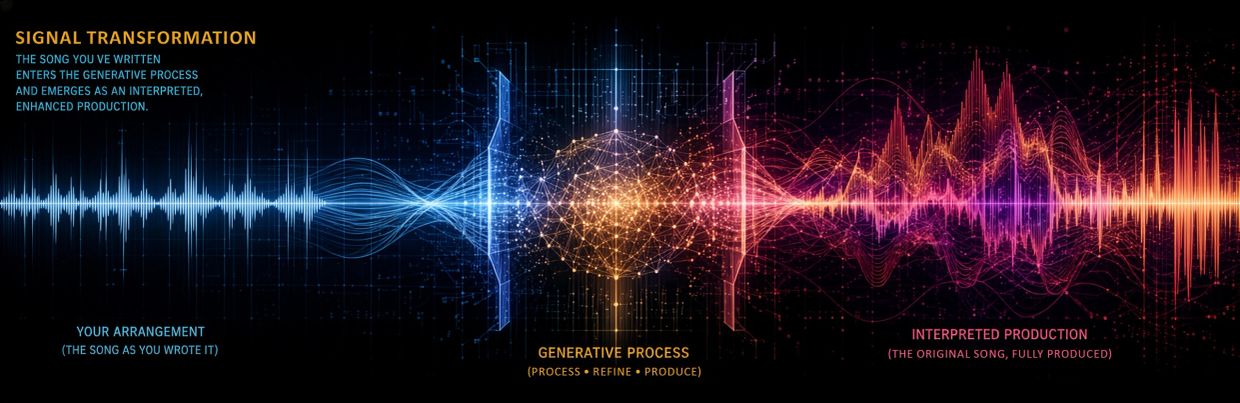
I export that arrangement and bring it into the generative system along with the lyrics and a description of the sound and production I'm trying to achieve. I'm not asking it to write a new song based on an idea. I'm giving it the song I've written and using the technology to help develop the production around it.
Ideally, the result still follows my arrangement, riffs, melodies, rhythm and overall musical identity. What I'm looking for is the additional dimension that comes from a more fully developed production: a more complete rhythm section, finished vocal performances, additional textures, synthesizers where appropriate, and the overall weight, energy and polish I'm trying to achieve.
The goal isn't transformation. It's enhancement.
And that distinction affects how I work with the results. If a generation substantially changes a riff, loses an important melody, alters the structure or otherwise moves too far away from the song I wrote, that's generally not what I'm looking for.
Generate, Listen, Adjust, Repeat
Getting there usually takes experimentation.
I may generate several versions while adjusting the instructions for production nuances Such as synth placement and production effects. I'm listening for the version that best preserves what matters in my original composition while adding the production elements I'm looking for.
I'm looking for what works, not handing over control of the composition.
That's very similar to the experimentation that happens earlier when I'm writing. I try something, listen, evaluate it and make another decision. The tools have changed, but that part of making music really hasn't.
Eventually I arrive at material that gives me the production I'm looking for while still sounding like the song I wrote.
And even then, I'm not finished.

Back Into Reason
Once I've selected the version that gives me the production I'm looking for, I export the complete stereo track and bring it back into Reason.
I deliberately work with the full stereo production rather than separating it into generated stems. I've experimented with stem separation, but in my experience it can introduce artifacts and compromise some of the cohesion of the complete stereo production. I prefer to preserve that finished stereo image and work from there.
But bringing the track back into Reason doesn't mean the song is finished.
There's still quite a bit of work left to do.
Editing the Final Arrangement
The first thing I do is listen to the entire production again critically.
Now I'm evaluating it as a finished recording rather than as a composition. An intro may run longer than I want. A transition might need tightening. A section may need to be shortened, extended or moved. There may be a moment I simply don't like.
I'll make those changes directly in Reason.
This is another reason the arrangement I created at the beginning remains so important. I know what the song is supposed to be, so I have a reference point when deciding whether something belongs.
The generated production doesn't get the final say. I do.
Balancing What Came Back
Because I'm working with a stereo production, I can't simply reach for individual channel faders the way I would with a traditional multitrack recording.
When the balance needs adjustment, I use tools such as iZotope RX Music Rebalance to make targeted changes within the stereo mix. That allows me to make adjustments to elements such as the vocals, bass, percussion or other musical content without completely dismantling the production.
These aren't usually dramatic changes. I'm generally trying to correct a balance issue while preserving the character and cohesion of the version I selected.
The same philosophy applies throughout this stage:
Keep what works. Fix what doesn't.
Cleanup and Restoration
Generative production can occasionally leave behind small artifacts, clicks, crackles or other unwanted sounds that become apparent once I start listening critically.
For those, I use restoration tools such as iZotope RX De-click and De-crackle where necessary.
I treat this much the same way I would any other recording cleanup. If I hear something that shouldn't be there, I address it. If I don't hear a problem, I don't process something simply because I can.
By this point, I'm no longer making decisions about what the song should be. Those decisions were made much earlier.
I'm finishing the recording of the song I already wrote.
And once the editing, balance and cleanup are where I want them, there's one major stage left:
Mix finishing and mastering.
Final Mastering
Once the editing, cleanup and overall balance are where I want them, the song moves into the final mastering stage.
This is the last major step before I consider the recording finished.
By this point, I'm not trying to change what the song is. The writing, performances, arrangement and production decisions have already been made. Mastering is about taking that finished production and making the final adjustments to its tone, dynamics, stereo image and overall level.
The goal is to finish the recording, not reinvent it.
Building the Master
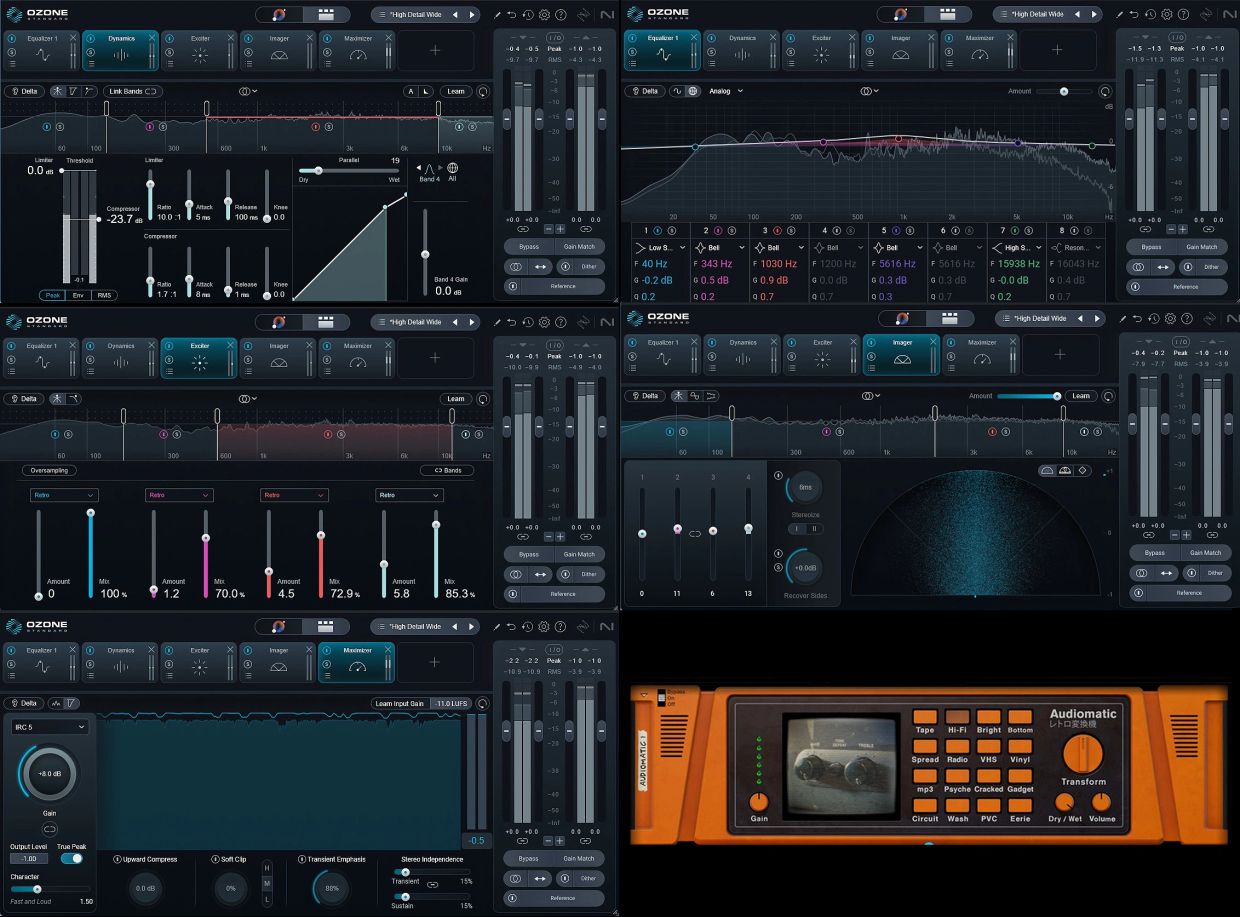
My current mastering process takes place inside Reason, with iZotope Ozone 12 handling much of the final processing.
The exact settings vary from song to song because I don't believe in forcing every recording through an identical preset or chain. I'll start from a general approach that I know works for my music, but then adjust it while listening to what that particular song actually needs.
For the master shown above, I'm using several different Ozone modules, including EQ, Dynamics, Exciter, Imager and Maximizer. Each addresses a different aspect of the finished recording.
EQ allows me to make final tonal adjustments across the frequency spectrum. I'm looking at the relationship between the low end, mids and upper frequencies, but more importantly, I'm listening. The visual information is useful, but the graph doesn't get to decide whether something sounds right.
Dynamics gives me additional control over how different frequency ranges respond and helps keep the overall recording controlled without removing the impact of the music.
The Exciter allows me to introduce harmonic character selectively across different frequency ranges. Used carefully, it can help add presence, definition or energy without simply turning something up.
The Imager deals with the stereo field. This is where I can make subtle adjustments to how narrow or wide different frequency ranges feel while making sure the center of the recording remains solid.
And finally, the Maximizer handles the last stage of level and limiting, allowing me to bring the finished recording to its final loudness while controlling peaks.
Loud Isn't the Same as Powerful
Metal is supposed to have weight and impact, so naturally I want the finished master to hit hard.
But simply making a recording louder doesn't necessarily make it more powerful.
Push things too far and the drums can lose their punch, guitars can become fatiguing, transients disappear and the entire recording can start feeling like one continuous wall of sound. That's not what I'm after.
I want the heavy sections to feel heavy because there's still enough contrast for them to have an effect.
For my current releases, I generally end up somewhere around -10 to -12 LUFS, depending on the song. I don't treat that as a target that has to be hit exactly. It's simply where many of my finished masters tend to land once they sound the way I want them to sound.
The number is useful information.
My ears still make the final decision.
Adding the Final Character
I also use Reason's Audiomatic Retro Transformer as part of the final processing when it suits the recording.
It's another tool for shaping the overall character rather than fundamentally changing the mix. Depending on the song, I'll use it subtly to add a little additional texture or personality to the finished sound.
That's really how I approach the entire mastering chain.
I'm not adding processing because a mastering checklist says something is supposed to be there. If a tool improves the recording, I'll use it. If it doesn't, I won't.
Sometimes the adjustment is obvious. More often, the differences I'm making at this stage are surprisingly small.
But several small decisions working together can make a significant difference in the finished master.
Listening Beyond the Screen
Meters, frequency analyzers, stereo displays and loudness measurements are extremely useful, and they're all part of my workflow.
But eventually I have to stop looking at them.
I'll listen to the master as music rather than as a project I'm working on. I'll listen at different volumes and pay attention to whether anything suddenly jumps out, disappears, becomes harsh or starts wearing on me.
I'll also step away from it.
After spending hours working on the same recording, your ears adapt to what you're hearing. Something that sounds perfectly normal at the end of a long session can become immediately obvious when you come back with fresh ears.
So I'll save it, walk away, and listen again later.
Sometimes I come back and change nothing.
Sometimes I hear something within seconds.
And sometimes that sends me right back into the project for another adjustment.
The song is finished when I stop hearing things I want to change.
And then comes the easiest, and sometimes hardest, test of the entire process:
I listen to it again.
The Final Tests
At some point, I have to stop adjusting things and decide whether the song is actually finished.
For me, that comes down to two final tests.
The Loop Test
The first is something I've always done, and it's completely unscientific.
Can I listen to the song on loop without getting bored with it?
I'll let the finished track play repeatedly while I'm doing something else. I'm not necessarily analyzing EQ curves, watching meters or actively looking for problems anymore. I'm just listening to the song.
If after several plays I'm still anticipating a particular riff, still enjoying the chorus, still waiting for that transition or wanting to hear the song start over again when it ends, that's a very good sign.
If I start wanting to skip a section, if something begins irritating me, or if my attention consistently drops at the same point, there's probably still something there worth examining.
After I've heard a song countless times through writing, recording, editing and mastering, I should still want to hear it one more time. If it stops pulling me back in, there's probably still something that needs attention.
It sounds simple, but after spending this much time constructing a song, I think it's an important test.
Because ultimately, if I can't listen to my own song on repeat, why would I expect anyone else to?
And Then... The Car Test
The very last test is an old studio tradition: the car test.
Throughout the production process, I'm listening through high-end studio equipment designed specifically for critical audio work. My studio monitors are carefully calibrated, and I also use professional studio headphones designed to provide an extremely accurate, neutral reference.
That's exactly what I want while I'm working. I need to hear detail. I need to hear problems. And I want as little artificial coloration from the playback system as reasonably possible when I'm making production decisions.
But that's not how most people are going to hear the song.
They're going to hear it through car stereos, earbuds, consumer headphones, Bluetooth speakers, televisions and countless other playback systems, each with its own frequency response, speaker placement, processing and limitations.
That's why the car test is so useful.
I take the finished master out to the car, turn it up and just listen.
A car is a completely different listening environment from a calibrated studio. Suddenly the low end may behave differently. The vocal may seem more forward or more buried. Something in the guitars might become harsh. The kick may hit differently. A mix that seemed perfectly balanced in the studio can reveal something unexpected when it's played through an ordinary consumer system in an enclosed space.
I'm not trying to make the song sound identical everywhere. That's impossible.
I'm checking whether the decisions I made in the studio translate into the real world.
If it still has the weight, clarity, balance and energy I intended, and nothing suddenly makes me want to run back inside and open Reason again, the car test is passed.
Then It's Finished
That's the entire process.
What eventually becomes a finished The Lazz song may have started with little more than a basic drum pattern, a guitar and an idea.
From there I write the riffs, develop the arrangement, build the rhythm section, perform the guitars, work out the vocal melodies, develop the production with generative technology, bring the result back into my studio, edit and clean it, master it, listen to it until I'm sick of analyzing it...
...and then take it for a drive.
That's what I mean when I describe The Lazz as Hybrid-Human.
AI is part of the process.
It isn't the process.
And ultimately, every song still begins and ends in the same place:
with me deciding what I want to hear.